

5 min read
It is Thursday afternoon and a long-time client emails you a single line: “Did you use AI to write this?” You did. You used it to draft the outline and tidy the final copy, and you rewrote most of it yourself. The work is good. But now you are explaining yourself after the fact, and that always sounds like a confession.
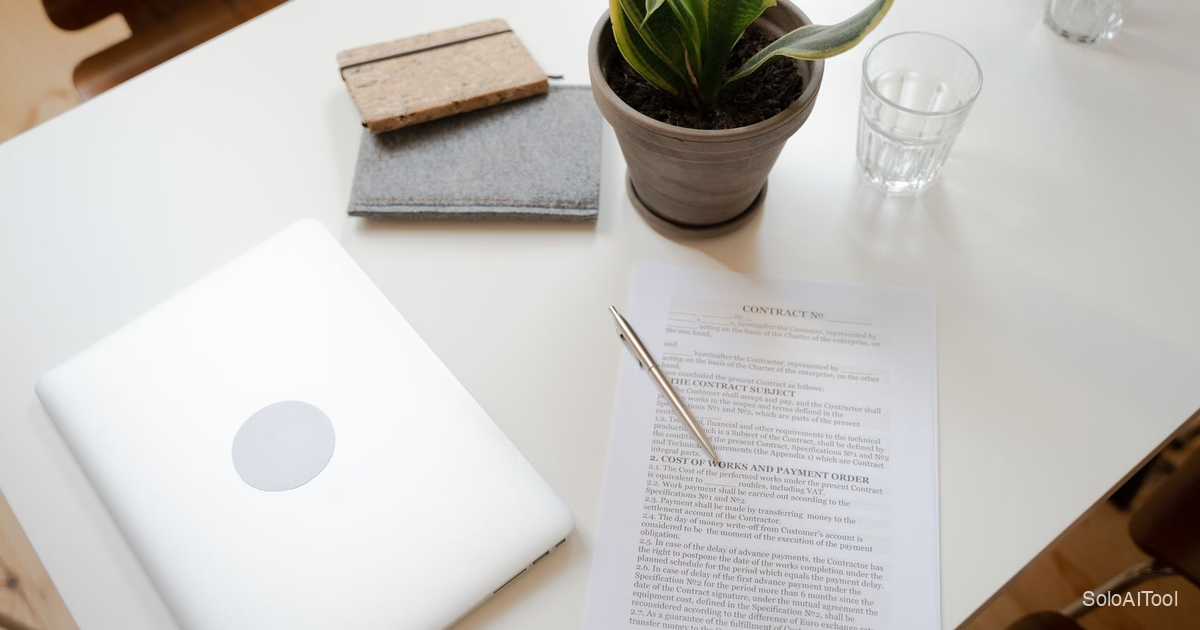
The fix is simple: tell clients how you use AI before they have to ask. This guide walks you through writing a short AI disclosure clause for your contracts and a one-paragraph AI policy for your website, in about an hour. It is practical guidance, not legal advice; if your work is regulated or the stakes are high, have a lawyer review your final wording.
Why a clause beats a casual mention
Clients are not really asking whether you used AI. They are asking three other questions: Is my confidential information safe? Who owns what you delivered? Am I still paying for your judgment? A good clause answers all three in writing, once, so you never have to improvise.
There is also a regulatory reason to be precise. The US Federal Trade Commission has warned businesses to keep their AI claims in check, and the same logic applies in reverse. Saying “100% handcrafted” when a tool did half the work is the kind of claim that ages badly.
Step 1: list what you actually use AI for
Open a blank note and write down every place AI touches client work. Be honest and specific. A typical freelancer’s list looks like this:
- Brainstorming ideas and outlines
- Drafting first versions of copy, emails or proposals
- Editing for grammar and clarity
- Summarizing research or call transcripts
- Generating draft images or mockups
Then write the list of things you never hand to AI. For many people that is final decisions, strategy recommendations, and anything containing a client’s private data. This second list is often what reassures clients most.
Step 2: decide your data rule
The most important sentence in your clause is about confidential information. Choose one of three positions and stick to it:
- No client data in AI tools at all. Simple and very safe, but limiting.
- Client data only in tools that do not train on it. Practical for most freelancers, as long as you check settings. Our comparison of ChatGPT and Claude privacy modes shows which settings do what.
- Client data only with written permission per project. Best for agencies or anyone handling health, legal or financial information.
Step 3: be clear about ownership
Ownership of AI-generated material is genuinely unsettled. The US Copyright Office’s AI resources explain its position that purely machine-generated content is not protected by copyright, while human creative contributions can be. That means you should not promise more than you can deliver. Promise to transfer whatever rights you hold, and promise that the final work reflects meaningful human authorship. Our article on AI-made logo copyright myths goes deeper on why this matters for design work.
Step 4: write the clause
Here is a plain-English starting point you can adapt. Keep it short; long clauses invite long negotiations.
Use of AI tools. The Contractor may use artificial intelligence tools to assist with research, drafting, editing and similar tasks. All deliverables are reviewed, edited and approved by the Contractor, who remains fully responsible for their accuracy and quality. The Contractor will not enter the Client’s confidential information into any AI tool that uses that information to train its models. On request, the Contractor will describe which tools were used on a project. The Contractor assigns to the Client all rights the Contractor holds in the final deliverables.
Read it aloud. If any sentence would be awkward to defend on a call, rewrite it until it is not.
Step 5: add a matching policy to your website
Your contract covers clients who sign. A short public policy covers everyone who is deciding whether to hire you. Put one paragraph on your services or about page, something like:
How I use AI: I use AI tools to speed up research and first drafts, which keeps my prices fair and my turnaround fast. Every piece of work is shaped, checked and finished by me. I never put client confidential information into tools that train on it.
That framing turns AI from a secret into a selling point: faster delivery and fair prices, with a human still in charge.
Step 6: back the promise with a checking habit
A clause that says “reviewed by the Contractor” only protects you if you actually review. Build a short checklist into your delivery routine: verify every fact, name and number, and reread anything an AI drafted in full. Our beginner guide to AI hallucinations (when AI confidently invents facts) explains what to look for.
Step 7: tell existing clients once
For current clients, do not wait for the next contract. Send a brief, friendly note: “I have added a short section to my terms about how I use AI tools. Nothing changes about the quality or ownership of your work; I just want you to have it in writing.” Most clients will reply with a thumbs up. A few will ask questions, and those conversations build trust.
Three follow-up questions to prepare for
Once clients see the clause, a few will ask more. Have a calm one-line answer ready for each:
- “Will you charge less if AI does part of it?” You charge for the result and your judgment, and AI is part of how you keep prices fair and delivery fast.
- “Can we opt out?” Decide in advance. Many freelancers offer an AI-free option at a higher rate or longer turnaround.
- “Which tools exactly?” Name them plainly. Vagueness here is what makes people nervous.
What you have after one hour
- A written list of where AI helps and where it never does
- One clear data rule
- A five-sentence contract clause
- A one-paragraph public policy
- A delivery checklist that makes the promise true
The next time a client asks “Did you use AI?”, you can simply say: “Yes, exactly as described in our agreement.” Have you had that question from a client yet, and how did you answer it?

