

5 min read
This is a composite case study. “Dana” and her numbers are illustrative, built from common patterns in small service businesses, so you can see the workflow in action. The tools and steps are real.
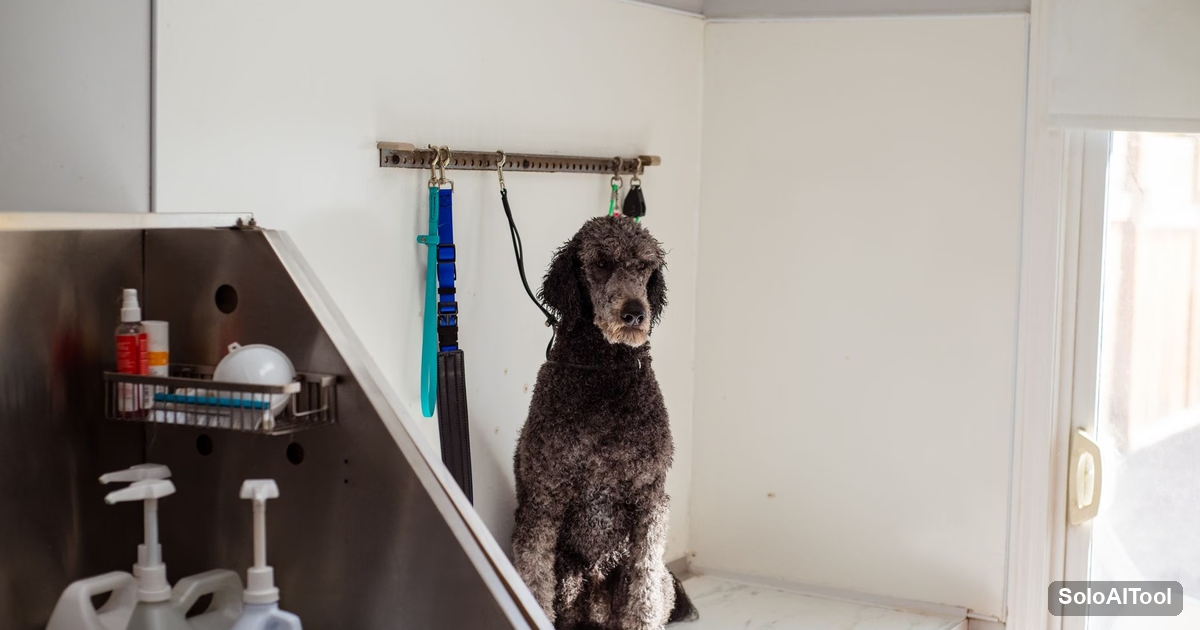
It is 7:40 on a Tuesday morning and Dana’s phone buzzes. “So sorry, Biscuit is sick, can we skip today?” That is her 9 AM, a 90-minute full groom, gone. By 8:15 a second text cancels her 1 PM. Dana runs a one-woman grooming studio out of a converted garage, and two empty slots on a Tuesday is not an inconvenience. It is most of the day’s profit.
For two years her fix was the same: scroll her contacts, guess who might want an earlier appointment, and text people one at a time while a dog waited on the table. Usually she filled one slot. Often she filled none.
Counting what the gaps really cost
When Dana finally added it up, the pattern was clear. She averaged about eight last-minute cancellations a month. At roughly $75 per appointment, that was around $600 a month in lost bookings, before counting the hour or more she spent scrambling to refill them.
She did not want an expensive new booking platform. She wanted three things: a list of clients who would happily come in early, a fast way to reach them, and messages that sounded like her rather than a robot.
Step one: a waitlist that clients fill in themselves
Dana created a simple Google Form titled “Want a sooner appointment?” It asked for the owner’s first name, the dog’s name and breed, the usual service, which days and times worked, and a checkbox giving permission to be texted about openings.
That permission box matters. Text messages to customers come with real rules, and the FCC’s consumer guidance on unwanted texts is a good reminder of why a clear opt-in, plus an easy way to opt out, protects both you and your clients.
She put the form link in her booking confirmation texts and on a small card at checkout. Within three weeks, 41 clients had signed up. The responses landed automatically in a Google Sheet.
Step two: an AI helper that knows her voice
Next, Dana set up a custom assistant in ChatGPT, using OpenAI’s feature for creating a GPT with saved instructions. Her instructions were short and specific:
- Write cancellation-fill texts under 300 characters.
- Always use the dog’s name first, then the owner’s.
- Warm and playful, never pushy. One emoji at most.
- State the exact day, time and service, and say the slot goes to the first reply.
- End with “Reply STOP to leave the waitlist.”
She also pasted in ten of her own favorite past texts as examples, so the assistant could copy her rhythm. The difference was immediate. Instead of “An appointment has become available,” she got “Good morning! Biscuit’s loss is Pepper’s gain 🐾 I just had a 9 AM full groom open up today. First reply gets it!”
Step three: the two-minute morning routine
Here is what happens now when a cancellation text arrives:
- Filter the sheet. Dana filters her waitlist by the day and service that just opened. Usually four to eight names match.
- Paste and ask. She pastes those rows into her custom GPT with one line: “9 AM full groom open today, write a text for each.”
- Review and send. She skims the drafts, fixes anything odd, and sends them from her phone in a small batch.
- First yes wins. She books the first reply and sends a short, friendly “it’s taken, you’re still on the list” note to anyone who answers later, also drafted by the assistant.
The whole loop takes about two minutes, often while the current dog is under the dryer.
What changed after 60 days
In this composite, the results look like this:
- Refill rate: from roughly one in four cancelled slots to about three in four.
- Recovered revenue: about $400 to $450 a month that used to disappear.
- Scramble time: from an hour or more a week down to under fifteen minutes.
- A surprise bonus: waitlist clients who got an early slot left more reviews, which fed straight into the routine from our guide on answering every Google review in five minutes a week.
Total new software cost: nothing beyond the ChatGPT plan she already paid for.
What Dana would do differently
Not everything worked first time, and the misses are the useful part:
- She sent to too many people at once. Early on she texted fifteen clients for one slot and had to disappoint fourteen. Now she sends to five at most, starting with people who have waited longest.
- She forgot breed timing. A doodle groom takes far longer than a chihuahua trim. She added “only offer slots long enough for the breed” to her instructions.
- She kept the human click. She considered fully automating the sends, but reviewing each batch caught two wrong dog names in the first week. For a business built on knowing every pet by name, that review stays.
How to copy this in your own business
This pattern works for almost any appointment-based solo business: tutors, massage therapists, stylists, trainers, photographers. If you want to see it in a different setting, our story of a solo piano teacher who got her Sunday nights back uses a similar mix of forms and saved instructions. And if missed calls, not cancellations, are your bigger leak, compare options in AI receptionist vs voicemail vs answering service.
Start small: one form, one saved set of instructions, one morning routine. Track your refilled slots for a month. If you recover even two appointments, the setup has paid for itself many times over.
What is the one gap in your calendar that costs you the most? That is your waitlist’s first job.
Related reading
- How a Solo Piano Teacher Got Her Sunday Nights Back From Scheduling and Parent Emails
- AI Receptionist vs Voicemail vs Answering Service: Which Should a Solo Business Use?
- How to Answer Every Google Review in Five Minutes a Week With AI
- How a Solo Mobile Mechanic Stopped Writing Invoices at Midnight With AI

